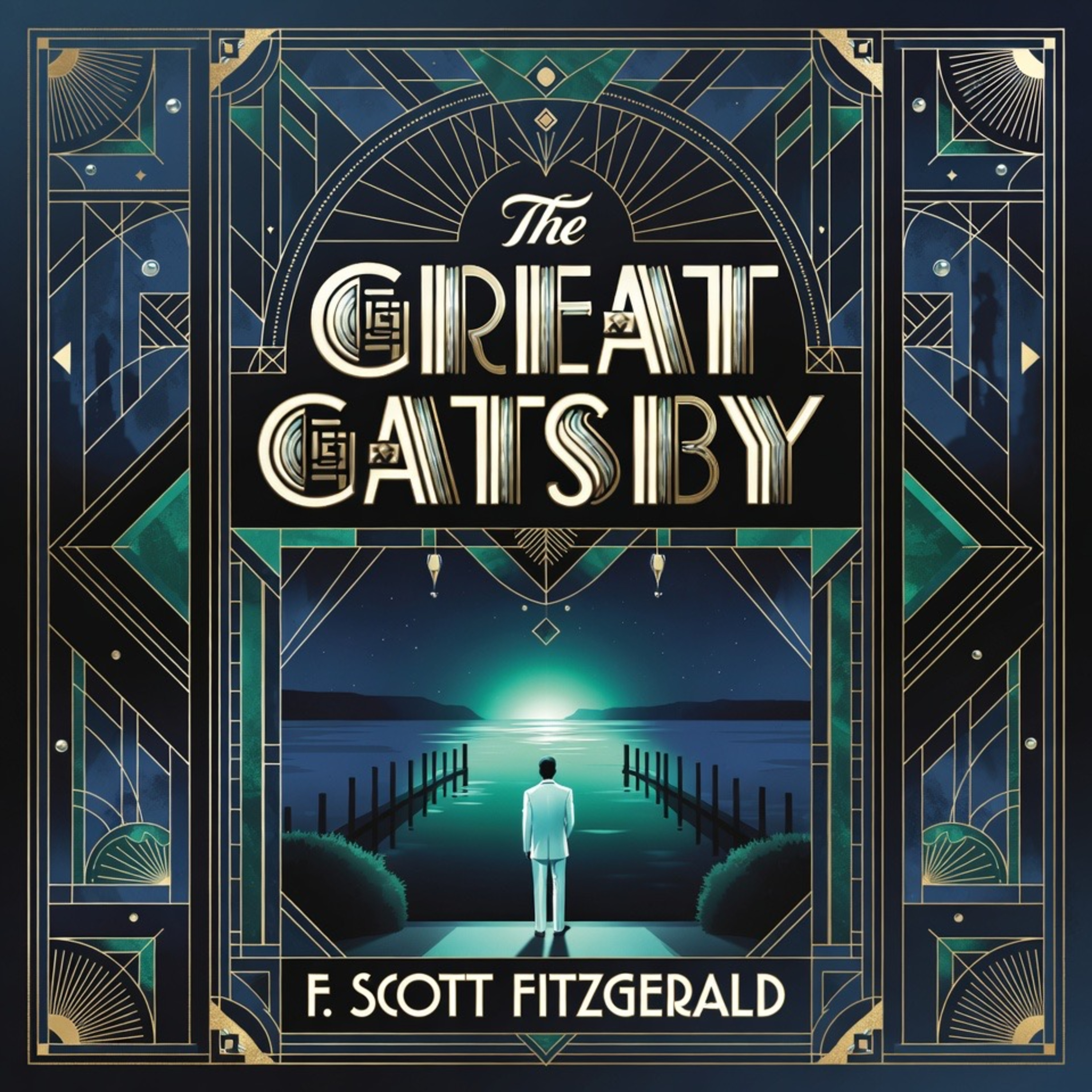
The Great Gatsby - Chapter Seven | Full Audiobook
The Story
This episode is sponsored by Wexley Pro, a professional, mobile-first book-production studio for iPhone.
Write, edit, format, and export complete books in EPUB, DOCX, and print-ready PDF formats, with local-first manuscript processing designed to keep your creative work under your control.
Discover Wexley Pro: https://wexley.pro
In Chapter Seven, everything breaks at once.
The parties are over. Gatsby has shut the whole operation down — fired the staff, closed the doors, turned out the lights. The spectacle was never for anyone else. It was always just a beacon for her. And now that she's back, none of it matters anymore.
But something has shifted. Tom knows. And on the hottest day of the summer, five people climb into two cars and drive toward New York — and nothing will be the same when they come back.
In a stifling suite at the Plaza Hotel, Gatsby finally says it out loud. Your wife doesn't love you. She never did. She loves me. And for one suspended moment, it almost works. But Daisy can't give him the one thing he needs — to erase the past completely. She loved him, yes. But she had loved Tom too. And that single admission is enough to let all the air out of the dream.
Then comes the drive home. The yellow car. Myrtle Wilson running into the road toward the wrong people. Gone before anyone could stop it.
And the chapter ends with an image that stays with you long after it's over. Gatsby standing alone in the dark outside the Buchanan house, watching a light in Daisy's window. Convinced he's protecting her. While inside, Daisy and Tom sit together at the kitchen table, hands touching, already closing ranks.
Nick walks away and leaves him there in the moonlight. Guarding over nothing. Follow the show so you never miss a chapter, and drop a comment with the classic you want us to read next — your suggestion could become our next season.
Welcome back to chapter by chapter, the audiobook experience. We're continuing The Great Gatsby by F Scott Fitzgerald. If this is your first time here, start from the beginning of this season and follow Nick Carraway story from the very start. And if you've been with us since Chapter 6, welcome back. The parties are over, the lights are out. Gatsby shut it all down the moment Daisy walked back into his life because the whole spectacle was never for anyone else. It was always just a beacon for her.
But something has shifted. Tom knows the dream Gatsby has been building for five years is about to collide with the real world at full speed. And in this chapter, someone is going to die. Follow the show so you never miss a chat and drop a comment with the classic you want us to read next. Now sit back and let's continue the story. Chapter 7. It was when curiosity about Gatsby reached its peak that the lights in his house failed to illuminate one Saturday night. And as mysteriously as it had begun, his reign as Trimalchio came to an end, only gradually did I notice that the cars turning expectantly into his driveway lingered for just a moment before driving away in disappointment.
Wondering if he was unwell, I went over to find out. A MU Butler with a sinister expression eyed me suspiciously from the doorway. Is Mr. Gatsby sick? Nope. After a pause, he added Sir in a slow, reluctant manner. I hadn't seen him around and I was rather worried. Tell him. Mr. Caraway stopped by who? He asked, his tone sharp. Caraway, Caraway. Fine, I'll let him know. With that, he slammed the doors shut. My housekeeper informed me that Gatsby had let go of all his servants a week prior, replacing them with a handful of new ones.
These newcomers never ventured into West Egg Village, avoiding any chance of being bribed by local tradesmen, instead ordering modest supplies Over the phone. The grocery delivery boy mentioned that the kitchen was a mess, and the general consensus in the village was that these new arrivals weren't actual servants. The next day, Gatsby called me. Are you leaving town? I asked. No old sport. I heard you let all your staff go. I wanted people who wouldn't spread rumors. Daisy visits quite often in the afternoons, so the entire operation had crumbled like a House of Cards under her disapproving gaze.
Their people? Wolfsheim wanted to help out. They're all siblings. They used to run a small hotel. I see he was calling at Daisy's request. Would I join her for lunch at her house tomorrow? Miss Baker would be there too. Half an hour later, Daisy herself called, sounding relieved to hear I was coming. Something was definitely in the air. Yet I couldn't imagine they'd choose this moment for a confrontation, especially not the intense scene Gatsby had described in the garden. The next day was scorching, nearly the last and certainly the hottest of the summer.
As my train emerged from the tunnel into the sunlight, only the piercing whistles of the National Biscuit Company disturbed the simmering midday stillness. The straw seats in the car seemed on the brink of ignition. The woman next to me perspired delicately into her white blouse, and as her newspaper grew damp under her fingers, she surrendered to the oppressive heat. With a despairing cry, her purse fell to the floor. Oh my, she gasped. I bent wearily to pick it up, handing it back to her at arm's length, gripping it by the very tips of the corners to show I had no ulterior motives.
But everyone nearby, including the woman, eyed me with suspicion none the less. Hot, remarked the conductor to familiar faces. What a scorcher. Hot. Isn't it hot hot, Is it hot enough for you? Is it hot? My commuter ticket was returned to me, marked with a dark stain from his sweaty hand. In this oppressive heat, who could care whose lips he kissed, or whose head left a damp spot on the pocket of his pajamas over his heart? A faint breeze drifted through the Buchanan's hallway, carrying the distant ring of the telephone out to Gatsby and me as we stood by the door.
The master's body, the Butler bellowed into the receiver. I'm sorry, Madam, but we can't provide it. It's far too hot to handle at midday. What he actually said was yes, yes, I'll see. He placed the receiver down and approached us, his skin glistening slightly, to collect our stiff straw hats. Madame awaits you in the salon. He announced, unnecessarily pointing the way. In this heat, every extra movement seemed an insult to the shared vitality of life. The room, shaded by awnings, was dark and cool.
Daisy and Jordan reclined on a massive couch like silver idols, their white dresses weighted down against the humming breeze of the fans. We can't move, they declared in unison. Jordan's fingers, dusted with white powder against her tan skin, lingered briefly in mine. And Mr. Thomas Buchanan, the athlete? I asked at the same time I caught the sound of his voice, gruff, muffled, and Husky, coming from the hallway telephone. Gatsby stood at the center of the rich Crimson carpet, his eyes wide with fascination as he took in the room.
Daisy watched him, her laughter sweet and thrilling. A small cloud of powder puffed up from her chest into the air. The rumor is. Jordan whispered. That's Tom's girl on the phone. We fell silent. The voice from the hall rose sharp with irritation. Fine, then. I won't sell you the car at all. I'm not obligated to you in any way. And As for you pestering me during lunch, I won't tolerate it holding the receiver. Daisy remarked cynically. No, he's not. I reassured her. It's a legitimate deal. I happen to know about it.
Tom burst through the door, his solid frame filling the space momentarily before he rushed into the room. Mr. Gatsby? He extended his broad, flat hand with a well masked dislike. I'm glad to see you, Sir Nick, let's have a cold drink. Daisy exclaimed as he left the room again. Daisy rose and went over to Gatsby, pulling his face down to kiss him on the mouth. You know I love you, She whispered. Remember, there's a lady present. Jordan remarked. Daisy glanced around. And certainly then kiss Nick too.
What a low, vulgar girl. I don't care, Daisy shouted and began to dance on the brick fireplace. Then, reminded of the heat, she sat down guiltily on the couch just as a freshly laundered nurse entered, leading a little girl. Blessed Precious, she cooed, extending her arms. Come to your own mother who loves you. The child released by the nurse dashed across the room and nestled shyly into her mother's dress. The Blessed Precious, did mother get powder on your old yellowy hair? Stand up now and say, how'd he do?
Gatsby and I each leaned down to take the small, hesitant hand. Afterwards, he continued to gaze at the child in surprise. I don't think he had ever truly believed it was real until now. I got dressed before lunch. The child announced eagerly to Daisy. That's because your mother wanted to show you off. Daisy replied, her face folding into the single wrinkle of her pale mech. You're a dream, you know. An absolute Little Dream. Yes. The child agreed serenely. Aunt Jordan is wearing a white dress too.
How do you like mother's friends? Daisy asked, turning the child to face Gatsby. Do you think they're pretty? Where's Daddy? She doesn't resemble her father. Daisy explained. She looks like me. She's got my hair and the shape of my face. Daisy reclined back on the couch. The nurse stepped forward, extending her hand. Come along, Pammy. Goodbye, sweetheart. With a reluctant glance back, the well mannered child took the nurse's hand and was let out the door just as Tom returned, ushering in four gin rickeys clinking with ice.
Gatsby picked up his drink. They definitely have a certain allure, he remarked, though tension was etched across his face. We drank deeply, almost ravenously. I read somewhere that the sun's getting hotter every year, Tom said in a friendly manner. Apparently soon enough the earth's going to fall into the sun. Or wait. Maybe it's the other way around. The sun's cooling down each year. Come outside. He invited Gatsby. I'd like you to see the place. I joined them as we stepped out onto the veranda.
The green sound lay still in the oppressive heat, with a solitary sail inching slowly toward the cooler sea. Gatsby's gaze lingered on it briefly. He gestured across the Bay. I'm right across from you. So you are. Our eyes drifted over the Rose gardens, the sun scorched lawn, and the ragged remnants of summer. Along the shore. The boat's white sails moved slowly against the blue cool boundary of the sky. Beyond lay the scalloped ocean and the abundant blessed Isles. That's the life, Tom said, nodding.
I'd love to be out there with him for an hour or so. We had lunch in the dining room, dimmed against the heat, and washed down our nervous cheer with cold ale. What are we going to do with ourselves this afternoon? Daisy exclaimed. And tomorrow, and for the next 30 years, don't be so grim. Life begins anew when the air turns crisp in the fall, But it's unbearably hot. Daisy insisted, her voice quivering with near tears. And everything feels so chaotic. Let's all go into town. Her words fought through the oppressive heat, shaping its senselessness into something tangible.
I've heard of converting a stable into a garage, but I'm probably the first to turn a garage back into a stable. Who wants to go to town? Daisy pressed, her insistence unwavering. Gatsbys gaze drifted toward her. She exclaimed. You look so cool. Their eyes locked, and they were momentarily alone in the universe. With effort, she glanced down at the table. You always look so cool, she repeated. In those words, she confessed her love for him and Tom Buchanan noticed he was taken aback. His mouth fell slightly open as he looked from Gatsby to Daisy, as if seeing her anew, like someone he had known long ago.
You remind me of that ad with the man. You know the one. Fine, I'm more than ready to head into town. Let's go, everyone, we're going to town. He stood up, his gaze darting sharply between Gatsby and his wife. No one else moved. Come on. His patience frayed slightly. What's the hold up? If we're going to town, let's get moving. His hand, shaking slightly with the strain of maintaining his composure, brought the last of his ale to his lips. Daisy's voice propelled us to our feet and out onto the scorching gravel driveway.
Are we just leaving like this? Can't we at least have a cigarette first? Everyone smoked all through lunch. Oh, let's just enjoy ourselves, it's too hot to make a fuss. He didn't respond. Fine, have it your way. She conceded. Come on, Jordan. They headed upstairs to prepare, leaving the three of us men standing there, shifting the warm pebbles beneath our feet. A sliver of the moon already hung in the western sky. Gatsby seemed about to speak, reconsidered, but not before Tom turned to him with a look of anticipation.
Do you have stables here? Gatsby asked, forcing the words out. About 1/4 mile down the road. Oh. A pause followed. I don't see the point of going to town. Tom burst out angrily. Women get these ideas. Should we bring anything to drink? Daisy called from an upstairs window. I'll grab some whiskey. Tom replied, heading inside. Gatsby turned to me, tense. I can't say anything in his house, old sport. Her voice is indiscreet, I noted. It's full of I hesitated. Her voice is full of money. He interjected suddenly.
That was it. I had never understood until that moment. The air was thick with the scent of wealth, an endless allure that ebbed and flowed, the clinking melody of coins, the Symphony of symbols. Somewhere high in a white palace, the King's daughter, the golden girl Tom, emerged from the house, wrapping a quart bottle in a towel with Daisy and Jordan trailing behind. They wore snug metallic hats and draped light capes over their arms. Shall we all take my car? Gatsby proposed, feeling the hot green leather of the seat.
I should have parked it in the shade. Is it a standard shift? Tom inquired. Yes, Well, why don't you take my coupe and I'll drive your car into town? Gatsby found the suggestion unappealing. I don't think there's much gas. He protested. Plenty of gas. Tom replied exuberantly, glancing at the gauge. And if it runs out, I can stop at a drugstore. You can buy anything at a drugstore these days. A pause settled in after this seemingly pointless comment. Daisy glanced at Tom with a frown, and an expression crossed Gatsby's face, both unfamiliar and yet somehow known as if it had only ever been described to me in words.
Come on, Daisy, Tom urged, nudging her toward Gatsby's car. I'll take you in this circus wagon. He opened the door, but she slipped away from his arms and brace. You take Nick and Jordan, we'll follow in the coupe. She walked closely beside Gatsby, her hand brushing his coat. Jordan, Tom, and I climbed into the front seat of Gatsby's car. Tom, unfamiliar with the gears, handled them cautiously. And we speed off into the stifling heat, leaving them behind. Did you see that? Tom demanded. See what?
He scrutinized me, realizing that Jordan and I had likely known all along. You think I'm pretty dumb, don't you? He suggested. Maybe I am, but I have this almost a sixth sense sometimes that guides me. You might not believe it, but science? He paused. The pressing reality snapped him back from the brink of abstract speculation. I've done a bit of digging into this guy, he went on. I could have gone further if I'd realized. Have you been consulting A psychic? Jordan asked with a playful grin. What?
He looked at us bewildered as we chuckled. A psychic About Gatsby? About Gatsby? No, I haven't, I said. I've been doing some light research into his background. And you discovered he was an Oxford man? Jordan offered helpfully. An Oxford man? He was skeptical. No way. He wears a pink suit. Regardless, he's an Oxford man. Oxford, New Mexico? Tom sneered dismissively. Or something like that. Listen, Tom, if you're such a snob, why did you invite him to lunch? Jordan demanded irritably. Daisy invited him.
She knew him before we got married, God knows where. We were all feeling irritable as the effects of the ale began to fade, and aware of this shared mood, we drove in silence for a while. As Doctor TJ Eckelberg's faded eyes loomed into view down the road, I recalled Gatsby's warning about the gasoline. We've got enough to make it to town, Tom declared. But there's a garage right here. I don't want to end up stranded in this scorching heat. Tom slammed on both brakes with impatience, bringing us to a sudden, dusty halt beneath Wilson's sign.
After a moment, the proprietor emerged from the depths of his establishment, his eyes hollow as he regarded the car. Let's get some gas, Tom shouted gruffly. What do you think we stopped for? To admire the scenery? I'm sick. Wilson replied without moving. Been sick all day. What's wrong? I'm completely worn out. Well, should I just help myself? Tom demanded. You sounded fine enough on the phone. With effort, Wilson stepped out from the shade and support of the doorway, breathing heavily as he unscrewed the cap of the tank.
In the sunlight, his face appeared A sickly green. I didn't mean to interrupt your lunch, but I really need some money and I was wondering what you plan to do with your old car. How do you like this one? Tom asked, gesturing to his vehicle. It's a nice yellow 1. Wilson replied, straining at the handle. Interested in buying it? Not a chance. Wilson managed to faint smile. No, but I could make some money off the other one. Why do you need money all of a sudden? I've been stuck here too long. I want to leave my wife and I want to head W. Your wife does.
Tom said, surprised. She's been talking about it for 10 years. Wilson paused, leaning against the pump and shading his eyes. And now she's going, whether she wants to or not. I'm going to get her out of here. The coupe speed past us, kicking up a cloud of dust with a hand waving briefly in its wake. What do I owe you? Tom demanded, his voice sharp and impatient. I've just caught wind of something strange these past couple of days. That's why I need to get away. That's why I've been pestering you about the car.
What do I owe you, $1.20? The unrelenting heat was starting to muddle my thoughts, and for a moment I was thrown off balance until I realized that Wilson's suspicions hadn't yet landed on Tom. He'd uncovered that Myrtle had a life beyond him in a world he wasn't part of, and the revelation had left him physically. I'll I looked from him to Tom, who had made a similar discovery less than an hour ago, and it struck me that no difference between men, whether in intellect or race, was as stark as the chasm between the sick and the healthy.
Wilson appeared so I'll that he seemed culpable, unforgivably so, like he'd just gotten some poor girl pregnant. I'll let you have that car, Tom said. I'll send it over tomorrow afternoon. That area always had a vaguely unsettling air, even under the harsh light of the afternoon, and now I turned my head as if alerted to something lurking behind over the ash heaps. The enormous eyes of Doctor TJ Eckelberg continued their watchful gaze, but soon I noticed another pair of eyes observing us with an intense focus from less than 20 feet away in one of the windows above the garage.
The curtains had been slightly drawn back, revealing Myrtle Wilson staring down at the car. She was so absorbed that she seemed unaware of being watched, and her face shifted through a series of emotions, like images slowly emerging in a developing photographed. Her expression was oddly familiar, one I'd often seen on women's faces. Yet on Myrtle Wilson it appeared aimless and baffling, until I realized her eyes, wide with jealous fear, were locked not on Tom, but on Jordan Baker, whom she mistakenly believed to be his wife.
There is no confusion quite like that of a simple mind, and as we drove away, Tom was gripped by a rising panic. His wife and his mistress, once secure and untouchable just an hour ago, we're now rapidly slipping from his grasp. Instinctively he pressed the accelerator. Driven by the dual urge to catch up with Daisy and leave Wilson behind, we raced towards Astoria at 50 miles an hour until, among the web like girders of the elevated train tracks, we spotted the leisurely blue coupe. Those big theaters around 50th Street are nice and cool.
I love New York on summer afternoons when everyone's away. There's something very sensual about it, Overripe, as if all sorts of strange fruits might just fall into your hands. The word sensual only unsettled Tom further, but before he could voice an objection, the coupe came to a halt and Daisy signaled for us to pull up alongside. Where are we headed? How about catching a movie? It's unbearably hot, she grumble. You go ahead, we'll drive around and catch up with you later. With a flicker of humor, she added.
We'll meet you on some corner. I'll be the one smoking 2 cigarettes. We can't debate this here, Tom said impatiently as a truck blared its horn behind us. Follow me to the South side of Central Park, right in front of the Plaza. Several times he glanced back to check for their car, and if traffic slowed them down, he eased up until they reappeared. I think he feared they might slip down a side street and vanish from his life forever, but they didn't. Instead, we all took the inexplicable step of securing the parlor of a suite at the Plaza.
The long and chaotic argument that led us into that room escapes me now, though I vividly remember the sensation of my underwear climbing like a damp snake around my legs and the intermittent cool beads of sweat trickling down my back. The idea was sparked by Daisy suggestion that we rent 5 bathrooms and take cold baths, which then morphed into the more concrete plan of finding A place to have a mint jewel jip. We each repeated that it was a crazy idea, all of us talking over one another to a bewildered clerk, believing or pretending to believe that we were being quite amusing.
The room was spacious yet suffocating, and though it was already 4:00 in the afternoon, opening the windows only let in a wave of hot air from the park's shrubbery. Daisy moved to the mirror, standing with her back to us, adjusting her hair. It's a nice sweet. Jordan whispered with a touch of reverence, prompting a round of laughter from the group. Open another window. Daisy instructed, not bothering to turn around. There aren't any more to open. Well, maybe we should call for an axe. The best thing is to ignore.
Or the heat, Tom said with irritation. Complaining just makes it worse. He unwrapped a bottle of whiskey from a towel and placed it on the table. Why not let her be, old sport? You were the one who wanted to come to town. A brief silence followed. The telephone books slipped from its hook and thudded to the floor, leading Jordan to murmur. Excuse me. But this time no one laughed. I'll get it, I offered. I've got it, Gatsby said. He inspected the broken string, muttered with interest, and tossed the book on a chair.
That's quite the expression you have, isn't it? Tom said sharply. What is? What's this old sport stuff? Where'd you pick that up? Now listen, Tom. Daisy said, turning away from the mirror. If you're going to start with personal jabs, I'm leaving right now. Why don't you call and order some ice for the mint jewel jib? As Tom reached for the phone, the suffocating heat seemed to burst into sound, and we were suddenly enveloped by the grand, ominous chords of Mendelssohn's wedding March drifting up from the ballroom below.
Can you imagine getting married in this heat? Jordan exclaimed gloomily. Well, I did get married in the middle of June, Daisy recalled. Louisville. In June. Someone fainted. Who was it? Tom Biloxi, he replied curtly. A man named Biloxi blocks Biloxi, and he actually made boxes, it's true. And he was from Biloxi, Tennessee. They brought him into my house because we lived just two doors from the church, and he stayed for three weeks until my father told him he had to leave. The day after he left, my father died.
After a pause, she added, as if to clarify any misunderstanding. There was no connection. I once knew a Bill Biloxi from Memphis. That was his cousin. I learned all about his family. Before he left. He gave me an aluminum putter that I still use. The music had quieted as the ceremony began, and a long cheer drifted in through the window, followed by scattered shouts of YEAH and finally a burst of jazz as the dancing began. We are getting old, Daisy said. If we were young, we'd be up and dancing.
Remember Biloxi? Jordan cautioned her. Where did you know him, Tom? Biloxi. He focused with effort. I didn't know him. He was a friend of Daisy's. He was not, she refuted. I had never seen him before he arrived in the private car. Well, he claimed he knew. You said he grew up in Louisville. ASA Brood brought him around at the last minute and asked if we had space for him. Jordan smiled. He was probably hitchhiking back home. He mentioned he was the president of your class at Yale. Tom and I exchanged puzzled looks.
Biloxi, first of all, we didn't have a president. Gatsby's foot tapped a quick, restless rhythm, and Tom suddenly focused on him. By the way, Mr. Gatsby, I hear you're an Oxford man. Not exactly. Oh, but I heard you went to Oxford. Yes, I did go there. A pause, then Tom's voice filled with disbelief and a touch of mockery. You must have gone there around the same time Biloxi was in New Haven. Another pause. A waiter entered with crushed mint and ice, but the silence was unbroken by his thank you and the gentle closing of the door.
This significant detail was finally about to be clarified. I told you I went there. Gatsby said. I heard you, but I'd like to know when. It was in 1919, but I only stayed for five months. That's why I can't really call myself an Oxford man. Tom glanced around, checking if we shared his skepticism, but all eyes were fixed on Gatsby. It was a chance They offered some officers after the Armistice, he went on. We could attend any university in England or France. I felt an urge to rise and give him a hearty pat on the back.
It was one of those moments when my faith in him was completely renewed, as it had been before. Daisy stood up, a faint smile on her lips, and moved to the table. Open the whiskey, Tom. She instructed. And I'll make you a mint julep. Maybe then you won't feel so foolish. Just look at the mint. Hold on a second, Tom snapped. I have one more question for Mr. Gatsby. Go ahead. Gatsby replied courteously. What kind of trouble are you trying to stir up in my house anyway? Finally, everything was out in the open and Gatsby seemed satisfied.
He's not causing trouble. Daisy said, looking desperately from one to the other. You're the 1 causing trouble. Please show a little self-control. self-control? Tom repeated, incredulous. I guess the trend now is to just sit back and let some nobody from nowhere make a move on your wife. Well, if that's the new norm, count me out. These days, people start by mocking family values and institutions, and soon they'll be tossing everything aside, even advocating for interracial marriage. Flushed with his fervent nonsense, he imagined himself as the last defender of civilization.
We're all white here, Jordan murmured. I know I'm not very popular. I don't throw big parties. I suppose you have to turn your house into a circus to have any friends in today's world. Despite my anger and everyone else's, I was tempted to laugh every time he spoke. The shift from libertine to moralist was so absolute. I've got something to tell you, old sport, Gatsby began, but Daisy anticipated his intent. Please don't, she interrupted, almost pleading. Let's just all go home. Why don't we all go home?
That's a good idea, I said, standing up. Let's go, Tom, no one wants a drink. I want to know what Mr. Gatsby has to tell me. Your wife doesn't love you. She never has. She loves me. You must be out of your mind, Tom exclaimed automatically. Gatsby leapt to his feet, charged with excitement. She never loved you, do you hear? She only married you because I was poor and she got tired of waiting for me. It was a terrible mistake, but in her heart, she never loved anyone but me. At this point, Jordan and I tried to leave, but Tom and Gatsby insisted with a competitive determination that we stay, as if neither had anything to hide and it would be a privilege for us to witness their emotions.
Sit down, Daisy. Tom's voice struggled to find a paternal tone. What's been happening? I want to hear everything I told you. What's been happening? It's been going on for five years and you had no idea? Tom turned sharply to Daisy. You've been seeing this guy for five years? Not seeing? No, we couldn't meet, but we loved each other all that time. Old sport, and you were unaware. I used to laugh sometimes, though. His eyes held no laughter, thinking You didn't know? Oh, that's all? Tom tapped his thick fingers together like a clergyman leaning back in his chair.
You're crazy. He burst out. I can't talk about what happened five years ago because I didn't know Daisy then, and I'll be damned if I understand how you got anywhere near her unless you were delivering groceries to the back door. But the rest of that is a damn lie. Daisy loved me when she married me, and she loves me now. No, Gatsby said, shaking his head. She does, though. The problem is she sometimes gets foolish ideas and doesn't know what she's doing. He nodded wisely. And what's more, I love Daisy too.
Occasionally I go off on a spree and make a fool of myself, but I always come back, and in my heart I love her all the time. You're revolting, Daisy said. She turned to me, her voice dropping an octave, filling the room with thrilling scorn. Do you you know why we left Chicago? I'm surprised they didn't regale you with the tale of that little escapade. Gatsby moved closer, standing beside her. Daisy, that's all in the past, he said with deep sincerity. It doesn't matter anymore. Just be honest with him, tell him you never loved him, and it all disappears forever.
She looked at him, her eyes unfocused. Why? How could I have ever loved him? You never loved him? She paused, her gaze drifting to Jordan and I, seeking some kind of support, As if she finally understood the gravity of her actions, and as if she had never truly intended to act at all. But the moment had arrived, it was too late. I never loved him. She said, her voice tinged with reluctance. Not at Kay Palani? Tom demanded abruptly. No. From the ballroom below, muted and stifling music floated up on the sweltering air.
Not that day. I carried you down from the punch bowl to keep your shoes dry. His voice was thick with a tender longing. Daisy, please don't. Her voice was icy, but the bitterness had drained away. She looked at Gatsby. They are, Jay, she said, though her hand shook as she tried to light a cigarette. Abruptly, she tossed both the cigarette and the lit match onto the carpet. Oh, you want too much, She exclaimed to Gatsby. I love you now, isn't that enough? I can't change the past. She began to sob uncontrollably.
I did love him once, but I loved you too. Gatsby's eyes flickered open and shut. You loved me too, He echoed. Even that's a lie. Tom interjected harshly. She didn't even know you existed. Why? There are things between Daisy and me that you'll never understand, things neither of us can ever forget. The words seem to cut Gatsby's physically. I want to speak to Daisy alone. He insisted. She's all worked up right now. Even alone, I can't say I'm never loved Tom. She confessed in a broken voice. It wouldn't be true, Of course it wouldn't.
Tom concurred. She turned to her husband. As if it really matters to you. Of course it matters. I'm going to take better care of you from now on. You don't get it. Gatsby interjected, a hint of panic in his voice. You're not going to be taking care of her anymore. I'm not. Tom's eyes widened and he laughed, feeling he could afford to keep his composure now. And why is that Daisy's leaving you? That's ridiculous, but I am. She said, mustering visible effort. She's not leaving me. Tom's words loomed over Gatsby, certainly not for a common swindler who'd have to steal the ring he put on her finger.
I can't take this, Daisy cried. Oh please, let's just leave. Who are you anyway? Tom burst out. You're part of that crowd that hangs around with Meyer Wolfsheim, that much I do know. I've done a little digging into your affairs and I'll dig deeper. Tomorrow you can make your own decision about that old sport. Gatsby replied with unwavering calm. I discovered what your so-called drugstores really were. He turned to us, speaking quickly. He and this Wolfsheim bought up a bunch of small drugstores here and in Chicago, selling grain alcohol right over the counter.
Just one of his little tricks. I pegged him as a bootlegger the moment I laid eyes on him, and I wasn't far off. So what? Gatsby replied with polite indifference. I suppose your friend Walter Chase wasn't too proud to get involved. And you left him high and dry, didn't you? Let him rot in a New Jersey jail for a month? God, you should hear Walter talk about you. He came to us flat broke. He was more than happy to earn some money. Old sport. Don't call me old sport. Tom shouted. Gatsby remained silent.
Walter could nail you on the betting laws too, but Wolfsheim scared him from keeping quiet. That strange yet familiar expression had returned to Gatsby. That drugstore operation was just pocket money. Tom continued slowly. But you're involved in something now that Walter's too scared to tell me about. I glanced at Daisy, who was staring in terror between Gatsby and her husband, and at Jordan, who had begun to balance an invisible yet captivating object on the tip of her chin. Then I turned back to Gatsby and was taken aback by his expression.
He looked as if he had killed a man, and I say this with full disdain for the idle gossip surrounding his estate. For a brief moment, his face could be described in just that extraordinary way. It faded, and he began speaking to Daisy with excitement, denying everything, defending his reputation against accusations that hadn't been voiced. But with each word, she withdrew further into herself. So he abandoned that effort, leaving only the lifeless dream to persist as the afternoon waned, trying to grasp what was no longer within reach, struggling unhappily yet without despair toward that lost voice across the room, the voice pleaded once more to leave.
Please, Tom, I can't endure this any longer. Her frightened eyes revealed that whatever resolve, whatever bravery she once had was now completely gone. You 2 head on home, Daisy, in Mr. Gatsby's car. She glanced at Tom, now visibly uneasy, but he responded with a kind of generous disdain. Go ahead, he won't bother you. I think he understands that his bold little flirtation is finished. They left without a word, disappearing abruptly, becoming accidental, isolated, like spectres, even beyond our sympathy.
After a moment, Tom stood up and began wrapping the unopened bottle of whiskey in a towel. Want any of this stuff, Jordan? Nick? I didn't respond. Nick. He repeated. What? Want any? No, I just remembered today's my birthday. I was 30. Ahead of me lay the ominous, threatening path of a new decade. It was 7:00 when we climbed into the coupe with him and headed for Long Island. Tom talked nonstop, jubilant and laughing, but his voice felt as distant to Jordan and me as the foreign clamor on the sidewalk or the roar of the elevated train above us.
Human empathy has its boundaries, and we were content to let all their tragic disputes fade with the city lights behind US. 30 The promise of a decade of solitude, a dwindling list of single men to meet, a dwindling briefcase of enthusiasm. Thinning hair. But there was Jordan beside me, who, unlike Daisy, was too wise to drag forgotten dreams from one era to the next. As we crossed the shadowy bridge, her pale face gently leaned against my shoulder, and the daunting specter of turning 30 faded away with the comforting touch of her hand.
So we continued driving toward death through the cooling twilight. The young Greek Mycalius, who ran the coffee shop next to the ash heaps, was the main witness at the inquest. He had slept through the afternoon heat until after 5, when he wandered over to the garage and found George Wilson looking truly ill in his office, pale as his own fair hair and trembling all over. Michaelis suggested he go to bed, but Wilson refused, insisting he'd lose too much business if he did. As his neighbor tried to convince him, a loud commotion erupted upstairs.
I've got my wife locked up there, Wilson explained calmly. She's staying there until the day after tomorrow, and then we're moving away. Michaelius was taken aback. They had been neighbors for four years, and Wilson had never seemed remotely capable of such a declaration. Typically, he was one of those worn out men. When not working, he sat in a chair by the doorway, staring at the people and cars passing by. Whenever anyone spoke to him, he would invariably laugh in a pleasant, colorless manner.
He belonged to his wife more than himself, naturally. Michaelius tried to uncover what had transpired, but Wilson remained silent, casting odd suspicious looks at his guest and questioning him about his whereabouts on specific days. As Michaelius began to feel uneasy, a group of workmen passed by on their way to his restaurant, giving him a chance to leave with plans to return later. But he never did. He assumed he simply forgot. When he stepped outside again a little after 7, the earlier conversation came back to him as he heard Mrs. Wilson's voice, loud and scolding, echoing from the garage below.
Beat me, she shouted. Throw me down and beat me, you cowardly little man. Moments later, she burst into the twilight, waving her arms and yelling. Before Michaelius could react, it was all over. The death car, as the newspapers would call it, didn't stop. It emerged from the encroaching darkness, hesitated tragically for an instant, and then vanished around the bend. Michaelius wasn't even sure of its color. He told the first policeman it was light green. The other car heading toward New York came to a halt 100 yards away, and it's driver rushed back to where Myrtle Wilson lay, her life violently snuffed out, kneeling in the road as her thick, dark blood mingled with the dust.
Mycalius and the driver reached her first, but when they tore open her shirtwaist, still damp with sweat, they saw her left breast hanging loose like a flap, and there was no need to check, for the heartbeat beneath. Her mouth was wide open, torn slightly at the corners, as if she had struggled to release the immense vitality she had held onto for so long. We noticed the cluster of three or four cars and the gathering crowd when we were still some distance away. An accident, Tom remarked. Well, at least Wilson will finally have some business.
He slowed the car, though he had no real intention of stopping. But as we drew closer, the somber, focused expressions of the people at the garage door made him instinctively hit the brakes. Let's take a look, he said uncertainly. Just a quick look. I then became aware of a hollow wailing sound emanating continuously from the garage as we stepped out of the coupe and approached the door. The sound resolved into the repeated gasping cry of Oh my God, there's serious trouble here. Tom said, his voice charged with excitement.
He stood on tiptoe, peering over the heads of the crowd into the dimly lit garage where a yellow light swung in a metal basket overhead. He made a harsh noise in his throat and with a forceful thrust of his strong arms, pushed his way through. The circle of people closed again with murmurs of protest. It took a moment before I could see anything. Then, as more people arrived and disrupted the line, Jordan and I were suddenly swept inside. Myrtle Wilson's body lay wrapped in layers of blankets on a work table against the wall, as if she were cold on this sweltering night.
Tom stood over her, his back to us, unmoving. Beside him, a motorcycle policeman was sweating profusely as he painstakingly recorded names in a small notebook. Initially, I couldn't locate the source of the high pitched, mournful cries that reverberated through the Stark garage. Then I noticed Wilson swaying on the raised threshold of his office, clutching the door posts with both hands. A man was speaking to him softly, occasionally trying to touch his shoulder, but Wilson seemed oblivious, neither hearing nor seeing.
His eyes drifted slowly from the swinging light to the table, burdened with his wife's body, then snapped back to the light as he continued his relentless, anguished wail. Oh my God, Oh my God, oh God, Oh my God. Eventually, Tom jerked his head up and after scanning the garage with vacant eyes, mumbled something incoherent to the policeman. Mav, the policeman was saying. Oh no, Rah, the man corrected. Mavro, listen to me, Tom muttered fiercely. Rah, said the policeman. Oh G.
He looked up as Tom's large hand landed firmly on his shoulder. What do you want, man? I want to know what happened. A car hit her, killed her instantly. Instantly killed. Tom echoed, staring blankly. She ran into the road. The bastard didn't even stop his car. There were two cars. Michaelis interjected. 1 coming, 1 going. You see? Going where? The policeman asked sharply. One was going each way. Well, She. His hand lifted toward the blankets but halted halfway, dropping back to his side. She ran out there and the one coming from New York hit her going 30 or 40 miles an hour.
What's the name of this place? The officer demanded. It doesn't have a name. A pale, well dressed black man stepped forward. It was a yellow car. A big yellow car, brand new. Did you see the accident? The officer asked. No, but the car passed me down the road, going faster than 40, more like 50-60. Come over here and tell me your name. Be careful now. I need to get his name. Somehow. These words must have reached Wilson, who was swaying in the office doorway, because suddenly his cries took on a new urgency.
You don't need to tell me what kind of car it was. I already know what kind of car it was. Watching Tom, I noticed the muscles in his shoulder tense beneath his coat. He moved swiftly over to Wilson and standing directly in front of him, gripped his upper arms firmly. You need to get a hold of yourself. Tom said with a gruff yet calming tone. Wilson's eyes locked onto Tom. He rose onto his tip toes and would have crumpled to the ground if Tom hadn't kept him upright. Listen. Tom said, giving him a slight shake.
I just got here from New York a moment ago. I was bringing you that coupe we talked about. That yellow car I was driving earlier wasn't mine, do you understand? I haven't seen it all afternoon. Only the black man and I were close enough to catch what he said. But the policeman sensed something in Tom's tone and looked over with a challenging stare. What's going on here? He demanded. I'm a friend of his. He says he knows the car that hit him. It was yellow. A vague suspicion flickered across the policeman's face as he eyed Tom.
And what color is your car? It's blue. A coupe. We just came straight from New York, I added. Someone who was driving a bit behind us vouched for this, and the policeman turned his attention elsewhere. Now if you could give me that name again correctly. Tom lifted Wilson as if he weighed nothing, carried him into the office, placed him in a chair and returned. Someone needs to stay with him. He commanded sharply. The two men closest exchanged reluctant glances before stepping into the room. Tom closed the door behind them and descended the single step, avoiding looking at the table.
As he passed me, he whispered. Let's go. With a self-conscious urgency, Tom LED us through the crowd that continued to gather his presence, parting the way. We passed a doctor rushing with his case summoned in a desperate hope half an hour earlier. Tom drove slowly until we rounded the bend. Then he floored it, the coupe tearing through the night. After a while, I heard a low, rough SOB and saw tears streaming down his face. The damn coward. He didn't even stop his car. The Buchanan's house emerged suddenly through the dark, whispering trees.
Tom halted beside the porch, gazing up at the 2nd floor, where 2 windows glowed warmly amidst the vines. Daisy's home. He remarked as we stepped out of the car. He glanced at me with a slight frown. I should have dropped you off in Westagnik. There's nothing we can do tonight. A shift had come over him. He spoke with a new found gravity and resolve. As we crossed the moonlit gravel to the porch. He addressed the situation with a few decisive words. I'll call for a taxi to take you home, and while you're waiting, you and Jordan should head to the kitchen and get some supper if you're hungry.
He opened the door. Come in. No thanks, but I'd appreciate it if you'd order the taxi for me. I'll wait outside. Jordan placed her hand on my arm. Won't you come in, Nick? No thanks. I felt a bit queasy and craved solitude, yet Jordan lingered a moment longer. It's only 9:30, she remarked. There was no way I was going back in. I'd had my fill of everyone for the day, and suddenly that included Jordan too. She must have caught a glimpse of this in my expression, for she abruptly turned and hurried up the porch steps into the house.
I sat for a few minutes with my head in my hands until I heard the phone being picked up inside and the Butler's voice summoning a taxi. Then I slowly walked down the drive, intending to wait by the gate. I hadn't gone 20 yards when I heard my name, and Gatsby emerged from between two bushes onto the path. I must have been feeling quite strange by then, because all I could focus on was the glow of his pink suit under the moonlight. What are you doing? I asked. Just standing here, old sport. Somehow that seemed like a pitiful way to pass the time.
For all I knew, he was about to rob the house. I wouldn't have been shocked to see sinister faces, the faces of Wolfsheim's people lurking behind him in the shadowy shrubbery. Did you encounter any trouble on the road? He asked after a moment. Yes. He paused. Was she killed? Yes, I suspected as much. I told Daisy I thought so. It's better for the shock to hit all at once. She handled it fairly well. He spoke as if Daisy's reaction was the only thing that mattered. I reached West Egg by taking a side road and left the car in my garage.
I don't think anyone saw us, but of course I can't be sure. By this point, my dislike for him was so strong that I didn't bother to correct him. Who was the woman? He asked. Her name was Wilson. Her husband owns the garage. How on earth did it happen? Well, I tried to turn the wheel. He stopped abruptly, and suddenly I realized the truth. Was Daisy driving? Yes, he admitted after a moment. But naturally I'll say it was me. You see, when we left New York, she was very anxious and thought driving might calm her, and this woman rushed out at us just as we were passing another car.
It all happened so quickly, but it seemed to me she wanted to speak to us, thought we were someone she knew. First Daisy turned away from the woman, headed toward the other car, But then she faltered and turned back. The moment my hand touched the wheel, I felt the impact. It must have killed her instantly. It tore her apart. Don't tell me, old sport. He flinched anyway. Daisy floored it. I tried to get her to stop, but she couldn't, so I yanked the emergency brake. Then she collapsed into my lap and I kept driving.
She'll be fine by tomorrow, he said after a moment. I'm just going to stay here and see if he tries to hassle her about that unpleasantness this afternoon. She's locked herself in her room and if he gets rough, she'll flick the light on and off. He won't lay a finger on her, I assured him. He's not even thinking about her. I don't trust him, old sport. How long will you wait? All night if I have to, at least until they all go to bed. A new thought struck me. What if Daisy discovered that Daisy had been the one driving?
He might convince himself he saw a connection. He could think anything, really. I glanced at the house. A few windows downstairs glowed brightly, and a soft pink light emanated from Daisy's room on the ground floor. Stay here, I instructed him. I'll check if there's any sign of trouble. I retraced my steps along the lawn's edge, quietly crossed the gravel, and crept up the veranda steps. The drawing room curtains were open, revealing an empty room. Passing the porch where we had dined that June night three months earlier, I approached a small rectangle of light I assumed was the pantry window.
The blind was down, but I found a gap at the sill. Daisy and Tom sat across from each other at the kitchen table, a plate of cold fried chicken between them and 2 bottles of ale. He was speaking earnestly to her, his hand resting over hers in a gesture of intensity. Occasionally she looked up and nodded in agreement. They didn't seem happy, yet they weren't unhappy either. There was an undeniable sense of natural intimacy in the scene, and anyone observing might have thought they were plotting together.
As I quietly left the porch, I heard my taxi cautiously making its way down the dark Rd. toward the house. Gatsby was waiting where I had left him in the drive. Is everything quiet up there? He asked, his voice tinged with worry. Yes, it's all quiet. I replied, though I hesitated. You should come home and get some rest. He shook his head. I want to stay here until Daisy goes to bed. Good night, old sport. He slipped his hands into his coat pockets and turned back eagerly to watch the house, as if my presence disrupted the sanctity of his vigil.
So I walked away, leaving him standing there in the moonlight, guarding over nothing. And that brings us to the close of Chapter 7 of The Great Gatsby by F Scott Fitzgerald. This was the chapter where everything broke at once. In a sweltering suite at the Plaza Hotel, Gatsby finally said the words out loud. Your wife doesn't love you. She never has. She loves me. And for one suspended moment, it almost worked. But Daisy couldn't give him what he needed. She loved him, yes, but she had loved Tom, too, and that admission was enough to let all the air out of the dream.
You could almost hear it go. Then came the drive home. The yellow car, Myrtle Wilson running into the road, arms outstretched toward the wrong people, gone before anyone could stop it. And then the last image of this chapter, the one that stays with you, Gatsby standing alone in the dark outside the Buchanan house, watching a light in Daisy's window, convinced he's protecting her. While inside, Daisy and Tom sit together at the kitchen table over cold chicken and ale, hands touching, already moving on, already closing ranks.
Nick walks away and leaves Gatsby there in the moonlight, guarding over nothing. Thank you for listening to chapter by chapter the audiobook experience. If this story has its hooks in you, follow the show so the next chapter finds you automatically. Like this episode and drop a comment with the classic you want us to read next. Your suggestion could become our next season. The next chapter is already waiting for you.
 Apple Podcasts
 Castbox
 Castro
 Goodpods
 Moon FM
 Overcast
 Pocket Casts
 Podbean
 Podcast Addict
 Podcast Republic
 Spotify